
Mastering Rate Limiting: Choosing the Right Algorithm for Enterprise System Design
Protect your enterprise backend from traffic spikes and abuse. Learn how Token Bucket, Leaky Bucket, Fixed Window, and Sliding Window algorithms work under the hood, with real-world examples and strategic selection criteria.
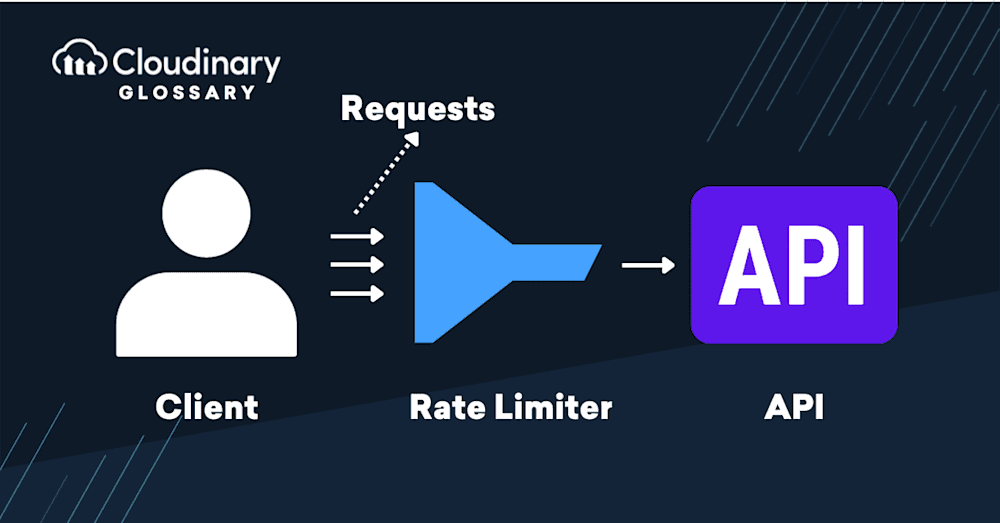
In high-scale enterprise applications, system stability is everything. Without proper safeguards, a sudden surge in traffic—whether from an unexpected viral marketing spike, a misconfigured client loop, or a malicious Distributed Denial of Service (DDoS) attack—can instantly crash your API servers and databases.
Rate limiting is the foundational security mechanism used to prevent these disasters. By restricting the number of requests a client can make within a specific timeframe, you guarantee system availability, control infrastructure costs, and ensure fair resource distribution across all users.
Let's dive deep into the mechanics, trade-offs, and practical implementations of the four core rate-limiting algorithms used in modern system design.
1. Token Bucket Algorithm: The Gold Standard for Dynamic Traffic
The Token Bucket algorithm regulates request flow using a metaphorical bucket that holds tokens. Tokens are continuously added to the bucket at a fixed rate ($r$) up to a maximum defined capacity ($c$). When a request hits your backend, the system checks if a token is available. If it is, one token is removed, and the request is processed. If the bucket is empty, the request is instantly rejected (typically with a 429 Too Many Requests status).
Key Advantage: Handling Bursty Traffic
Unlike restrictive algorithms, the Token Bucket naturally handles short, intense bursts of traffic. If a user has been inactive, their bucket fills to max capacity ($c$). If they suddenly trigger 10 rapid API requests, the system processes them simultaneously without latency, provided tokens exist. Once the burst empties the bucket, traffic is strictly throttled to the refill rate ($r$).
A Clean Python Implementation:
import time class TokenBucket: def __init__(self, rate: float, capacity: float): self.rate = rate # Tokens added per second self.capacity = capacity # Max bucket capacity self.tokens = capacity # Current token count self.last_refill = time.time() def allow_request(self) -> bool: now = time.time() # Lazily calculate token accumulation since last request elapsed = now - self.last_refill self.tokens = min(self.capacity, self.tokens + (elapsed * self.rate)) self.last_refill = now if self.tokens >= 1: self.tokens -= 1 return True return False
2. Leaky Bucket Algorithm: Enforcing a Steady, Predictable Flow
The Leaky Bucket algorithm processes incoming traffic through a first-in, first-out (FIFO) queue. Think of it as a water bucket with a small hole at the bottom. Requests arrive at irregular intervals and fill the bucket. The system extracts and processes requests from the bottom at a strict, constant leak rate ($r$). If the incoming request volume exceeds the bucket's queue capacity, the bucket overflows, and excess requests are immediately discarded.
Key Advantage: Traffic Smoothing
While Token Bucket permits bursts, Leaky Bucket completely flattens them. It is ideal for data egress or downstream services that cannot tolerate sudden spikes and require a predictable, constant processing timeline.
A Clean Python Implementation:
import time class LeakyBucket: def __init__(self, capacity: float, leak_rate: float): self.capacity = capacity # Max queue size self.leak_rate = leak_rate # Requests processed per second self.bucket_size = 0.0 # Current volume in queue self.last_updated = time.time() def add_request(self, request_size: float = 1.0) -> bool: now = time.time() elapsed = now - self.last_updated self.last_updated = now # Leak requests out of the bucket based on time passed self.bucket_size = max(0.0, self.bucket_size - (self.leak_rate * elapsed)) # Verify if there is space in the queue to accept the new request if self.bucket_size + request_size <= self.capacity: self.bucket_size += request_size return True return False
3. Fixed Window Algorithm: Simplicity with a Critical Flaw
The Fixed Window algorithm divides time into discrete chunks (e.g., solid 1-minute blocks from 12:00 to 12:01). A counter tracks the requests made by a user within that active block. When the clock hits the next window boundary, the counter resets completely to zero.
The Challenge: The Boundary Burst Vulnerability
While exceptionally memory efficient and easy to write, traditional fixed window algorithms suffer from a major edge-case bug. If a user sends their entire quota at 11:59:59 (the tail end of Window A) and sends another full quota at 12:00:01 (the beginning of Window B), they successfully bypass the rate limit by executing double the allowed requests within a 2-second interval, potentially overloading your infrastructure.
A Clean Python Implementation:
import time class FixedWindow: def __init__(self, window_size: float, max_requests: int): self.window_size = window_size # Window duration in seconds self.max_requests = max_requests # Request limit per window self.requests = 0 self.window_start = time.time() def allow_request(self) -> bool: now = time.time() # Reset the window if the time frame has elapsed if now - self.window_start >= self.window_size: self.requests = 0 self.window_start = now if self.requests < self.max_requests: self.requests += 1 return True return False
4. Sliding Window Algorithm: High Precision, Eliminating Edge Cases
The Sliding Window Log algorithm resolves the boundary issue by tracking a rolling timeline for each client. Instead of saving an integer counter, it logs exact timestamps of every request in a fast data structure (like a Redis sorted set or standard deque). When a new request arrives, the algorithm evicts all timestamps older than the window length and counts the remaining items to determine approval.
Key Advantage: Absolute Precision
It completely eliminates the double-quota boundary exploit found in fixed windows. However, because it logs individual timestamps, it incurs significantly higher memory overhead, making it expensive for platforms with massive traffic scaling.
A Clean Python Implementation:
import time from collections import deque class SlidingWindow: def __init__(self, window_size: float, max_requests: int): self.window_size = window_size self.max_requests = max_requests self.timestamps = deque() def allow_request(self) -> bool: now = time.time() # Clear out obsolete entries outside the rolling window frame while self.timestamps and self.timestamps[0] <= now - self.window_size: self.timestamps.popleft() if len(self.timestamps) < self.max_requests: self.timestamps.append(now) return True return False
Architectural Decision Matrix: Which One Should You Build?
Choosing the ideal strategy requires balancing system capabilities with your targeted traffic pattern requirements:
| Algorithm | Memory Footprint | Handles Bursts? | Best Real-World Use Case |
|---|---|---|---|
| Token Bucket | Low (Stores 2 numbers) | Yes | Public APIs, User-Facing Software, Mobile App backends. |
| Leaky Bucket | Medium (Queue buffer) | No (Enforces steady rate) | Egress data operations, processing heavy background jobs. |
| Fixed Window | Very Low (Stores 1 number) | No (Prone to edge spikes) | Basic user auth systems (e.g., limiting login attempts). |
| Sliding Window | High (Stores all timestamps) | Yes | Premium high-precision APIs where abuse policy is strict. |
Summary Verdict
For standard web infrastructure, the Token Bucket offers the ultimate architecture sweet spot. It provides robust protection against long-term resource abuse while allowing your API clients the natural operational flexibility to burst data when their apps load.