Agile Explained: Building Better Software Through Collaboration and Adaptability
Agile transformed software development by prioritizing collaboration, adaptability, and continuous delivery over rigid planning. Learn what Agile is, why it emerged, how Scrum works, and why modern engineering teams rely on Agile to build successful products.
Agile Explained: Building Better Software Through Collaboration and Adaptability
Software development used to be predictable.
At least, that was the assumption.
Teams would spend months gathering requirements, designing solutions, creating documentation, and planning every detail before writing a single line of code.
The belief was simple.
If we plan everything perfectly at the beginning, the project will succeed.
Unfortunately, reality had other ideas.
Customers changed their minds. Markets evolved. New technologies appeared. Requirements shifted. By the time many projects were completed, the original plans were already outdated.
This problem led to the rise of Agile.
Agile is not a tool. It is not a framework. It is not a project management software.
Agile is a mindset for building products in a world where change is inevitable.
The Problem with Traditional Development
For many years, software teams followed a process known as the Waterfall model.
The workflow looked something like this:
Requirements
      ↓
Design
      ↓
Development
      ↓
Testing
      ↓
Deployment
Each phase had to be completed before the next phase could begin.
On paper, this seemed organized.
In practice, it created significant challenges.
- Requirements became outdated.
- Customer feedback arrived too late.
- Bugs were discovered near the end of the project.
- Teams spent months building features users didn't actually need.
Projects often exceeded budgets, missed deadlines, or failed entirely.
The Birth of Agile
In 2001, seventeen software developers met in Utah to discuss better ways of building software.
The result was the Agile Manifesto.
Rather than focusing on rigid processes and excessive documentation, Agile emphasized people, collaboration, and adaptability.
The manifesto introduced four core values.
The Four Agile Values
Individuals and interactions over processes and tools.
Processes are important, but effective communication between people is even more important.
Working software over comprehensive documentation.
Documentation has value, but software that actually works delivers far greater value.
Customer collaboration over contract negotiation.
Customers should be active participants throughout development, not just at the beginning and end.
Responding to change over following a plan.
Plans are useful, but successful teams adapt when circumstances change.
What Agile Looks Like in Practice
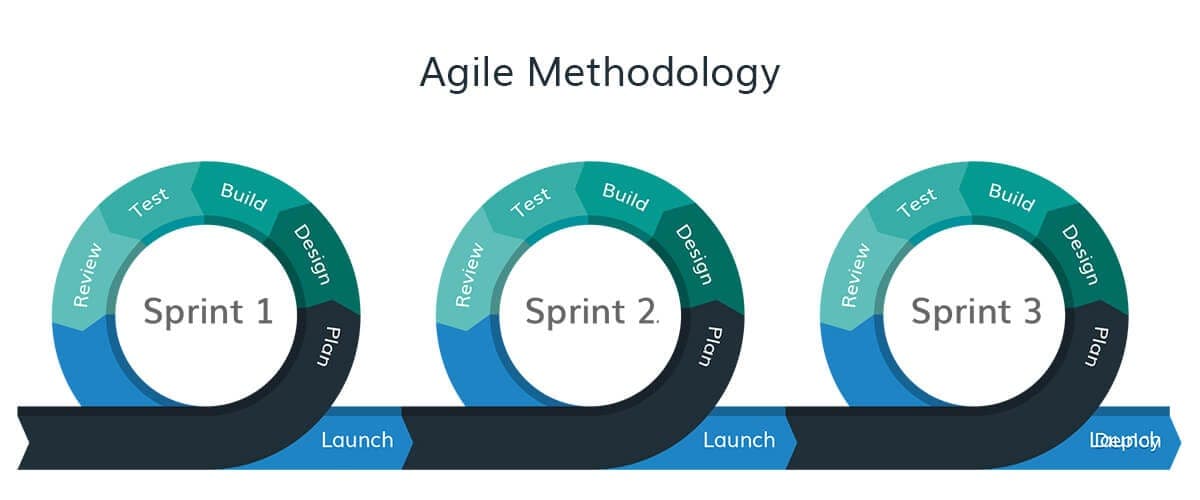
Instead of spending a year building an entire application, Agile teams break work into smaller increments.
Each increment delivers usable value.
The process typically looks like this:
Plan
  ↓
Build
  ↓
Test
  ↓
Review
  ↓
Improve
  ↓
Repeat
This cycle repeats continuously throughout the project.
Rather than waiting months for feedback, teams receive feedback every few weeks.
Sprints: The Heart of Agile Development
Many Agile teams work in short time-boxed periods called sprints.
A sprint usually lasts between one and four weeks.
At the beginning of a sprint, the team selects a set of tasks.
During the sprint, developers focus on completing those tasks.
At the end of the sprint, working software is demonstrated to stakeholders.
This creates a continuous delivery cycle.
Instead of delivering software once a year, teams deliver improvements every few weeks.
The Scrum Framework
One of the most popular implementations of Agile is Scrum.
Scrum defines several key events.
Sprint Planning
The team decides what work will be completed during the upcoming sprint.
Daily Stand-Up
A short daily meeting where team members discuss:
- What they completed yesterday
- What they will work on today
- Any blockers they are facing
Sprint Review
The team demonstrates completed work to stakeholders and gathers feedback.
Sprint Retrospective
The team reflects on what went well and what can be improved.
The goal is continuous improvement.
A Real-World Example
Imagine a startup wants to build a food delivery application.
Using a traditional approach, the team might spend six months building every feature before releasing anything.
With Agile, they might release features incrementally.
Sprint 1:
- User Registration
- User Login
- Basic Home Screen
Sprint 2:
- Restaurant Listings
- Food Details Page
- Search Functionality
Sprint 3:
- Cart Management
- Checkout Process
- Payment Integration
Users begin providing feedback much earlier.
The team learns what customers actually want instead of making assumptions.
Benefits of Agile
Faster Delivery
Features reach users sooner, allowing businesses to generate value more quickly.
Better Customer Satisfaction
Regular feedback ensures products evolve according to real user needs.
Reduced Risk
Problems are identified early rather than near project completion.
Improved Team Collaboration
Frequent communication helps teams stay aligned and resolve issues quickly.
Greater Adaptability
Changing requirements become manageable rather than disruptive.
Common Misconceptions About Agile
Agile does not mean no planning.
Agile teams plan continuously instead of relying on a single massive plan.
Agile does not mean no documentation.
Documentation still exists when it provides value.
Agile does not mean moving fast at all costs.
The goal is sustainable delivery, not developer burnout.
Agile does not eliminate deadlines.
It simply provides more flexibility in how work is prioritized and delivered.
Agile in Modern Engineering Teams
Today, Agile is used by startups, enterprises, and technology companies around the world.
Teams building mobile applications, web platforms, cloud infrastructure, and enterprise systems all benefit from Agile principles.
Whether you're developing a Flutter application, a backend API, or a distributed microservices platform, Agile helps teams manage complexity while continuously delivering value.
Final Thoughts
Technology changes quickly.
Customer expectations change quickly.
Markets change quickly.
The ability to adapt has become one of the most valuable skills in software development.
Agile embraces this reality.
Rather than assuming everything can be predicted upfront, Agile encourages teams to learn, adapt, and improve continuously.
At its core, Agile is not about ceremonies, stand-ups, or sprint boards.
It is about delivering value, collaborating effectively, and responding to change with confidence.
In a world where change is constant, that mindset remains just as relevant today as when the Agile Manifesto was first written.