Why Flutter Became My Framework of Choice: A Computer Engineer’s Perspective
From mobile apps and web platforms to board games and scalable software systems, Flutter has become my preferred framework for modern development. This article explores why I chose Flutter, what makes it unique, where it excels, where it falls short, and how it transformed the way I build software.

Why Flutter Became My Framework of Choice: A Computer Engineer's Perspective
Every developer eventually finds a technology that changes the way they think about building software.
For some developers, it's React.
For others, it's Django, Spring Boot, .NET, or Node.js.
For me, that technology was Flutter.
When I first started exploring application development, I was exposed to the traditional approach of building separate applications for different platforms.
Android required one technology stack.
iOS required another.
Web applications had their own ecosystem.
Desktop applications often required entirely different tools.
The amount of duplicated effort felt unnecessary.
Then I discovered Flutter.
At first, I viewed it simply as a cross-platform framework.
Over time, I realized it was much more than that.
Flutter fundamentally changed how I approach software development.
More Than Cross-Platform Development
The feature most people associate with Flutter is cross-platform development.
And rightfully so.
Flutter allows developers to build applications for Android, iOS, Web, Windows, macOS, and Linux from a single codebase.
That alone is impressive.
But what attracted me wasn't simply writing code once.
1It was maintaining code once.
As projects grow, maintenance becomes significantly more expensive than development.
Fixing bugs, implementing new features, updating business logic, and supporting multiple platforms can quickly become overwhelming.
Flutter dramatically reduces that burden.
The Developer Experience Is Exceptional
One of Flutter's greatest strengths is its developer experience.
The first time I used Hot Reload, it felt almost magical.
A UI change appeared instantly.
An animation tweak could be tested immediately.
A layout issue could be corrected within seconds.
Instead of waiting for lengthy build processes, development became highly interactive.
This feedback loop increases productivity more than many developers realize.
Small improvements made thousands of times throughout a project create enormous time savings.
Flutter Feels Like Real Software Engineering
As applications grow, architecture becomes increasingly important.
I enjoy building software that is maintainable, scalable, and easy to understand.
Flutter supports this exceptionally well.
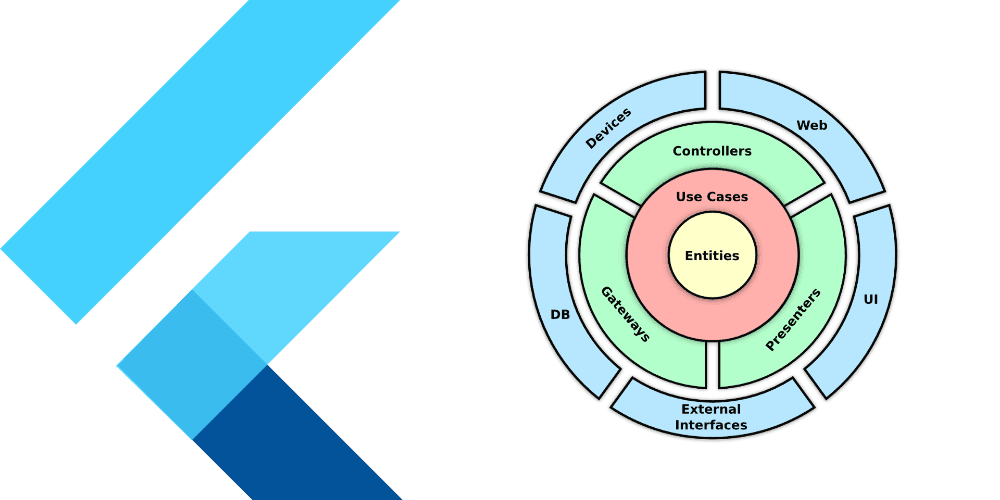
Whether using MVVM, Clean Architecture, Feature-First Architecture, or Domain-Driven Design principles, Flutter provides the flexibility needed to organize large projects properly.
A typical project structure might look like:
lib/ ├── app/ ├── core/ ├── features/ │ ├── auth/ │ ├──
profile/ │ ├── settings/ │ └── game/ └── l10n/
This separation allows projects to remain manageable even as they continue growing.
2For me, Flutter isn't just about creating interfaces.
It's about creating systems.
Flutter's UI System Is One of Its Biggest Strengths
Many frameworks depend heavily on platform-specific components.
Flutter takes a different approach.
Everything is a widget.
Buttons are widgets.
Text is a widget.
Layouts are widgets.
Animations are widgets.
This consistency makes UI development surprisingly intuitive.
More importantly, it provides complete control over the user experience.
Designs can be implemented with remarkable accuracy without constantly fighting platform limitations.
State Management Has Matured Significantly
One criticism often directed at Flutter is the number of available state management solutions.
Provider.
Bloc.
Riverpod.
MobX.
GetX.
Redux.
At first glance, this can seem overwhelming.
3I see it differently.
The ecosystem has matured enough to offer solutions for different requirements.
Personally, I enjoy using Riverpod because it combines state management, dependency injection, and testing support into a single solution.
It enables clean implementations of MVVM and Clean Architecture while maintaining excellent developer experience.
Flutter Is Not Just for Mobile Apps
Many people still think Flutter is exclusively a mobile development framework.
That perception is outdated.
Today, Flutter powers:
- Mobile Applications
- Web Applications
- Desktop Software
- Internal Business Tools
- Admin Dashboards
- Educational Platforms
- IoT Interfaces
- Game Interfaces
This versatility is one of the reasons I continue investing time in Flutter.
The skills transfer across multiple domains.
Flutter and Game Development
One area I particularly enjoy is game development.
For 2D games and digital board games, Flutter combined with Flame creates an incredibly productive development environment.
Games such as:
- Ludo
- Chess
- Snake and Ladder
- Card Games
- Puzzle Games
benefit greatly from Flutter's architecture and UI capabilities.
While Flutter is not intended to compete with Unreal Engine for AAA titles, it excels in categories where business logic, multiplayer systems, and user experience are more important than advanced 3D rendering.
The Ecosystem Continues to Improve
4Another reason I remain confident in Flutter is its ecosystem.
The package ecosystem provides solutions for almost every common requirement.
- Firebase Integration
- Authentication
- Local Storage
- Networking
- State Management
- Animations
- Maps
- Payments
- Notifications
- Machine Learning Integrations
Instead of reinventing the wheel, developers can focus on solving business problems.
Flutter Isn't Perfect
No technology is perfect.
Flutter has limitations.
Application sizes can be larger than purely native applications.
Some platform-specific features still require native integration.
Certain highly specialized use cases may benefit from fully native development.
And for advanced 3D gaming, dedicated engines remain the better choice.
Understanding these trade-offs is important.
The best engineers choose tools based on requirements rather than hype.
Why I Continue Choosing Flutter
The reason I continue using Flutter isn't because it's trendy.
It's because it consistently helps me build software faster without sacrificing quality.
It allows me to apply software engineering principles, create maintainable architectures, develop beautiful user experiences, and deploy across multiple platforms from a unified codebase.
Whether I'm building a mobile application, a web platform, an AI-powered solution, or a digital board game, Flutter enables me to focus more on solving problems and less on platform-specific complexity.
Final Thoughts
Technology changes constantly.
Frameworks rise and fall.
5New tools appear every year.
But occasionally a technology fundamentally improves the way developers work.
For me, Flutter is one of those technologies.
It combines productivity, flexibility, maintainability, and performance in a way that few frameworks manage to achieve.
More importantly, it allows me to spend less time fighting tools and more time building meaningful software.
And ultimately, that's what great technology should do.